
Introduction
If you’ve ever visited a Japanese shrine or temple, you may have noticed small strips of paper tied to fences or trees. These are called Omikuji (おみくじ)—Japan’s traditional fortune slips. For just a small coin, you can try your luck and receive a message about your future. Whether it brings joy or disappointment, drawing an Omikuji is a fun, spiritual, and uniquely Japanese experience. Let’s explore what Omikuji are, how to read them, and what to do if your fortune isn’t so great.
What Is an Omikuji?
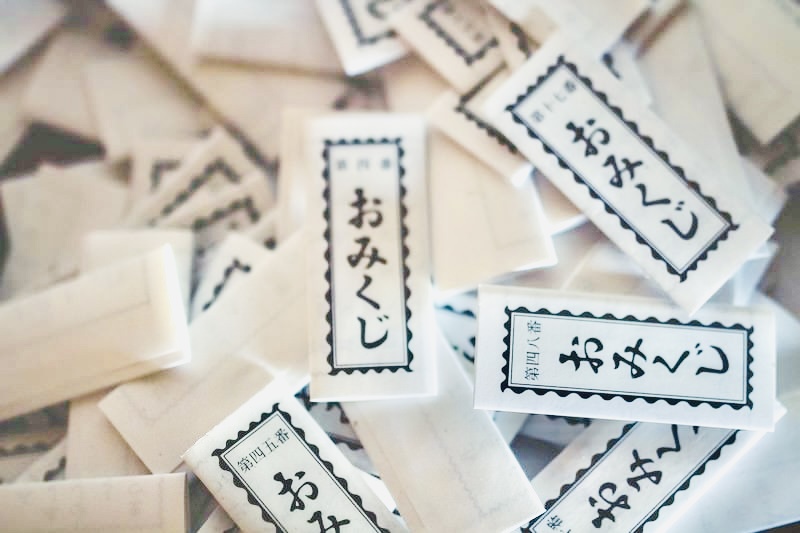
Omikuji (おみくじ) are paper fortunes available at many Shinto shrines and Buddhist temples in Japan. The name combines “omi” (sacred) and “kuji” (lottery). People draw them to receive a divine message about their future, covering areas like health, love, work, and travel.
How to Draw an Omikuji
- Pay a small fee (usually around 100 yen)
- Shake a box or draw a numbered stick to receive your Omikuji.
- Take the corresponding fortune slip and read your result.
✅ Some places now offer Omikuji in English or with illustrations!
Types of Fortunes You Might Get

- 大吉 (Dai-kichi) – Great Blessing (very lucky)
- 中吉 (Chū-kichi) – Middle Blessing
- 小吉 (Shō-kichi) – Small Blessing
- 吉 (Kichi) – Blessing
- 末吉 (Sue-kichi) – Future Blessing
- 凶 (Kyō) – Bad Luck
- 大凶 (Dai-kyō) – Great Misfortune (very unlucky)
What If You Get Bad Luck?
Even if your Omikuji predicts bad luck, there’s no need to worry. At many shrines and temples, visitors tie their Omikuji to a rack or tree. This act is called “musubu” (結ぶ), meaning “to tie” or “to connect.” Traditionally, it was believed that tying a bad fortune would leave the misfortune behind.
However, many people also tie good fortunes, as a way to strengthen their wishes or express gratitude. Whether good or bad, tying your Omikuji is seen as a symbolic gesture to connect your prayers with the divine.

Final Thoughts
Drawing an Omikuji is an easy and affordable way to experience Japanese spirituality and tradition. Whether you get good luck or bad, it’s all part of the charm—and a great story to take home!
コメント