Introduction
Visiting a Shinto shrine in Japan? Whether you’re a curious traveler or a culture lover, understanding proper shrine etiquette can make your experience more meaningful. Here’s a simple guide to the essential steps and what they symbolize.
Before You Start
There are no rigid or “one-size-fits-all” rules when it comes to visiting a Shinto shrine. Customs can vary by region or shrine, and even Japanese visitors may follow slightly different styles. What truly matters is showing respect and sincerity. Think of the following steps not as strict rules, but as a helpful guide to experience the atmosphere with mindfulness.
Step-by-Step Etiquette
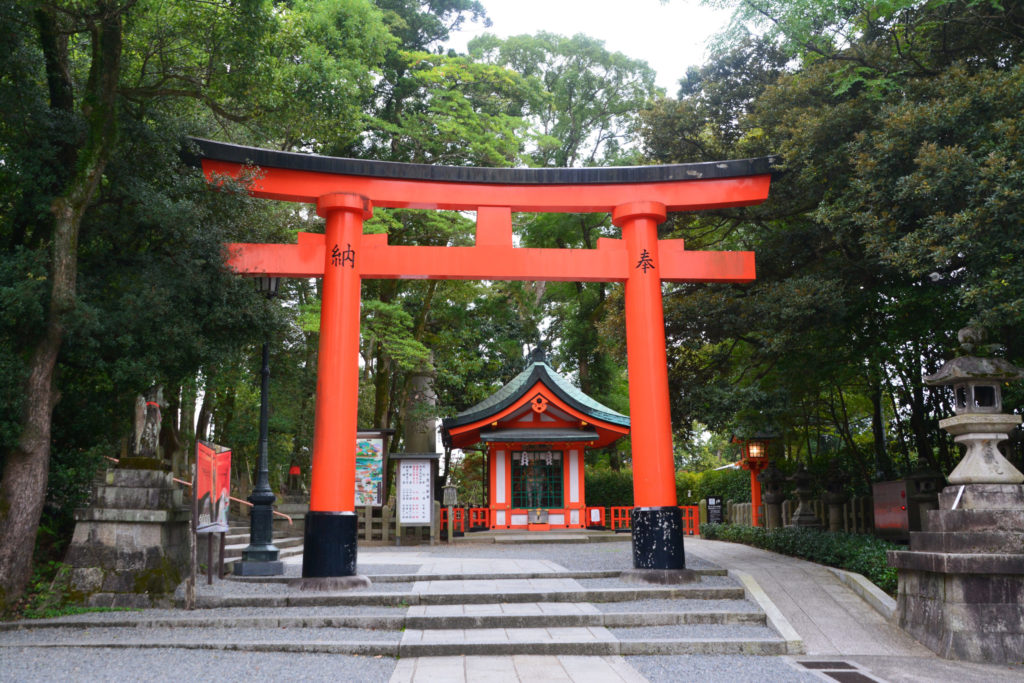
1. Bow before entering
At the torii gate (the sacred archway), stop and bow slightly. It shows respect for the sacred space you’re about to enter.
2. Purify your hands and mouth
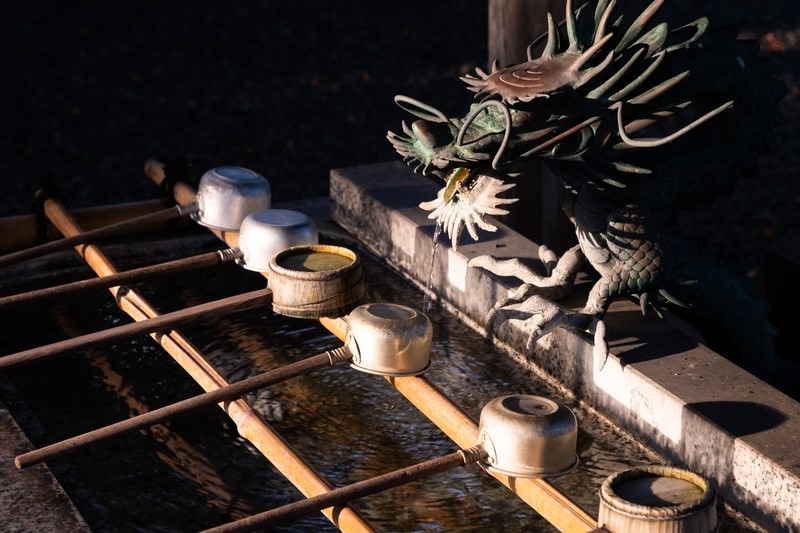
At the temizuya (water basin), cleanse your hands and rinse your mouth:
- Use the ladle in your right hand to pour water over your left hand.
- Switch hands and do the same.
- Pour water into your left palm, rinse your mouth quietly, and spit the water beside the basin (not into it).
- Let remaining water run down the handle.

3. Make an offering and pray
At the main shrine building:
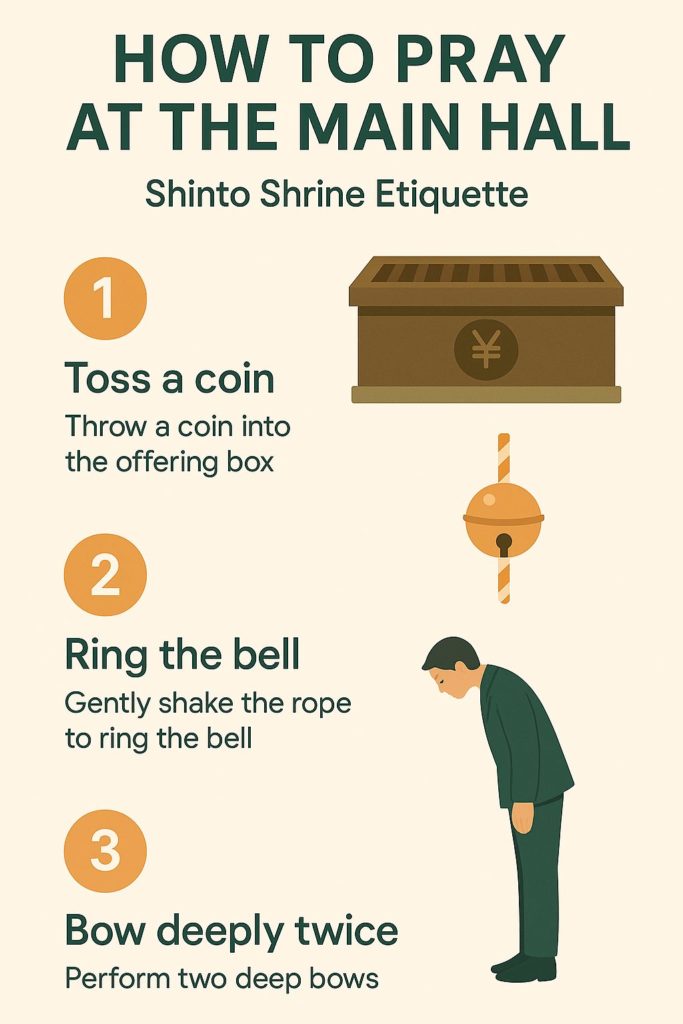
- Toss a coin into the offering box.
- If there’s a bell (suzu), gently ring it—it’s a way to call the deity’s attention before your prayer.
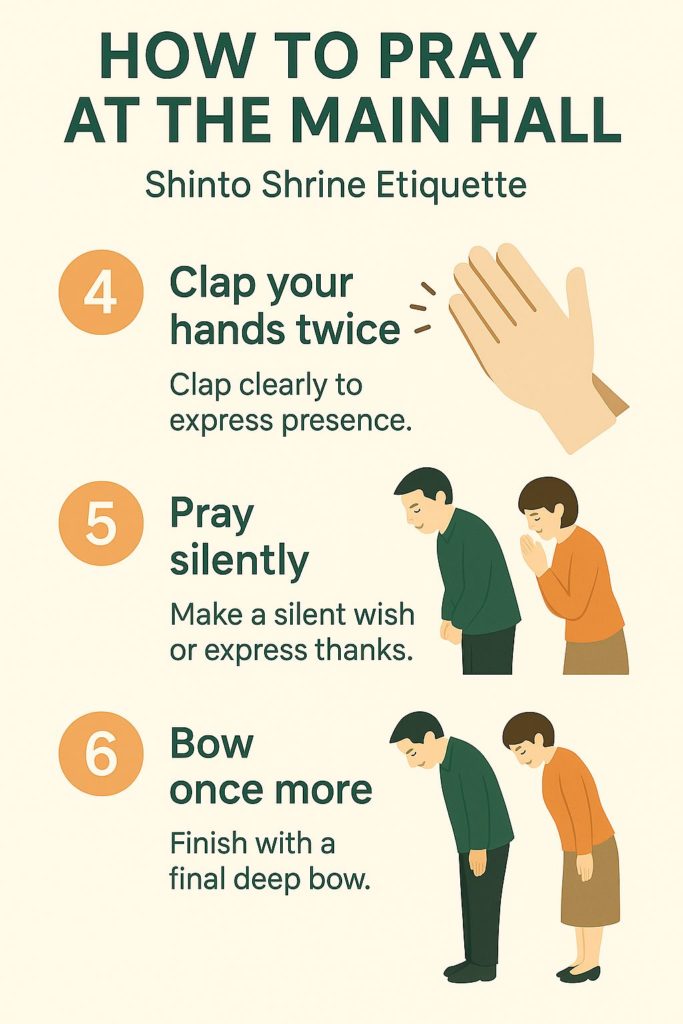
- Bow twice deeply.
- Clap your hands twice.
- Offer a silent prayer.
- Bow once more.
Bonus Tips
- Don’t walk directly through the center of the torii—it’s the path for the gods.
- Photography may be restricted—look for signs.
- Avoid loud conversations; the shrine is a sacred space.
Closing
By following these steps, you not only show respect but also deepen your cultural connection. Next time you visit a Shinto shrine, you’ll know exactly what to do—respectfully and with heart.


コメント